Archive for the ‘Argentine Customs and Culture’ Category

The Origins and Influences of Musical Styles in Latin America (Part One)

Monday, May 20, 2013 14:55

Categories - Argentine Customs and Culture - 0 Comments

This week we will be writing a three-part blog series on music in Latin America. The blog will be divided into; (1) The origins and influences of musical styles in Latin America, (2) Current music in a variety of Latin American countries, (3) Exploring Argentine music.

THE ORIGINS AND INFLUENCES OF MUSICAL STYLES IN LATIN AMERICA (PART ONE)

Latin America is comprised of those countries in the Caribbean, Central, South and  North America (Mexico) where Spanish and Portugese are the official languages.

latin america 1 255x300 The Origins and Influences of Musical Styles in Latin America (Part One)

Latin America

CARIBBEAN

  • Cuba
  • Dominican Republic
  • Haiti
  • Puerto Rico

CENTRAL AMERICA

  • Costa Rica

  • El Salvador

  • Guatemala

  • Honduras

  • Nicaragua

  • Panama

  • Belize

NORTH AMERICA

  • Mexico

SOUTH AMERICA

  • Argentina
  • Bolivia
  • Brazil
  • Chile
  • Colombia
  • Ecuador
  • Paraguay
  • Peru
  • Uruguay
  • Venezuela

Firstly, it is important to know that the vast genres of Latin American music were highly influenced by European colonization and the slave trade with Africa.

brazil music 300x199 The Origins and Influences of Musical Styles in Latin America (Part One)

Brazilian drum show

The styles of Latin music are amalgamations of cultural influences, namely European, specifically from the Spanish of which the Moorish empire had left a huge cultural imprint. The Moors were the medieval Muslim inhabitants of countries including Morocoo, western Algeria, Western Sahara, Italy, Malta and their Iberian territory Al-Andalus, an area comprising Gibraltar, much of what is now Spain and Portugal, and part of France. The Moors were known for their rich musical expressions, use of guitars (in which the classical Spanish guitar originated) and many song types and verse structures of which after their defeat, were adopted and integrated into the Spanish music culture and furthermore developed over many years. Many other Moorish integrations contribute to Spain’s cultural growth and there always have and always will be close correlations between the two cultures because of their history which was shared for more than 400 years.

spain2 300x285 The Origins and Influences of Musical Styles in Latin America (Part One)

Moorish music

One of the most obvious observations of European influence on Latin American music would be of course that the majority of Latin vocals are sung in either Portugese or Spanish. As the first Spanish Conquest with Christopher Columbus came in 1492, and later the Portugese Conquest of Brazil in 1500, also came the development and spreading of the Spanish and Portugese languages in the Americas.

Christopher Columbus xx Sebastiano del Piombo 235x300 The Origins and Influences of Musical Styles in Latin America (Part One)

Christopher Columbus

Spanish and Portuguese have persisted long after Portugal and Spain gave up their colonies though, and the languages lent a unique cohesion to the mosaic of musical styles in the region. A Spanish instrument that has played a key role for many years is the güiro. It is constantly used in Latin-American music and is used in rhythm section of important genres like cumbia and salsa.

5549795 a guiro gourd percussion instrument being played against a black background in the horizontal format 300x199 The Origins and Influences of Musical Styles in Latin America (Part One)

A guiro, Spanish instrument

Putting the language factor aside, it is important to remember that the indigenous people of the New World had their own music. For instance, the Maya culture produced all kinds of percussion and wind instruments. All kinds of flutes were made all over the American continent and fortunately, this original expression has persisted to date in traditional Latin music like South America’s Andean music.

safe image 300x168 The Origins and Influences of Musical Styles in Latin America (Part One)

Andean music

The African slave trade that started during the early stages of exploration and settlement, brought approximately 12 million Africans (of whom many were also of Moorish descent) to the Americas between the 16th and 19th century.

african slaves working the plantation The Origins and Influences of Musical Styles in Latin America (Part One)

Slavery in Latin America

The act of drumming back in Africa had long been recognized as a spiritual act and consequently was very common in religious ceremonies. Another amazing use for the drums was for communicative purposes and often codes were used to be played over long distances for the sending and receiving of messages. The most common form of using drums was just for the pure joy and allowed for free-form dance. The slaves brought this mentality and craftsmanship with them over the ocean and were fortunately allowed by their owners to liberally play their drums, one of the only rights they were able to receive and therefore played with much passion and gusto.

candombe federal epoca rosas boneo s 300x233 The Origins and Influences of Musical Styles in Latin America (Part One)

Slaves drumming

Because of the busy ports in places like New Orleans and Louisiana where many ships would stop for trading and supplies, slaves who were musically-inclined on the Caribbean ships were able to exchange new rhythms, dances, and songs among slaves from neighbouring ships. This, through the centuries gave birth to a rich cultural mix between the African slaves and native population- a distinct Moorish or commonly referred to as Afro-Caribbean culture. African musical influences include:

  • syncopations (offbeat accents) and cross-rhythms

  • use of percussion

  • call and response group singing style

  • singing styles

During the the 17th and 19th centuries in particular, these Afro rhythms developed and spread throughout the Caribbean. This music was traditionally played or accompanied by native percussion and string instruments, namely the timbales, congas, bongo, guitar, and the tres (nine-string Cuban guitar).

instruments 300x200 The Origins and Influences of Musical Styles in Latin America (Part One)

African instruments

Every country and every island in the Caribbean developed its own unique musical culture, many musical styles of which are very well-known today and tie-in very closely with some Brazilian styles:

-Bolero

-Son

-Plena

-Bomba

-Bachata

-Reggae

-Ska

-Zouk

-Samba

-Salsa

-Merengue

-Timba

To tie in from influences from many years ago, we must acknowledge African-American music and how it has influenced a more recent time in history. In particular, the development of Jazz has had a tremendous impact in the creation of new Latin music rhythms such as Mambo, Bossa Nova, and Latin Jazz.

musgen bossanova1 The Origins and Influences of Musical Styles in Latin America (Part One)

Bossa Nova

Also, In the last 30 years African-American styles like R&B and Hip-Hop have really defined the development of Latin music genres such as Reggaeton and Urban music which are incredibly popular styles in many Latin and foreign countries around the world.

images 16 The Origins and Influences of Musical Styles in Latin America (Part One)

Reggaeton group


Argentine Beef

Friday, May 17, 2013 14:41

Categories - Argentine Customs and Culture - 0 Comments

Cows were brought into Argentina by the Spanish in 1536. The cattle soon multiplied as a result of the geography of the Pampas and a local market. The introduction of refrigerated trains and ships in the late nineteenth century paved the way for strong exports to the United States and Europe.  The flipped seasons between the Northern and Southern Hemispheres meant that Argentine beef came onto the market at a time of year when beef was less at hand in the Northern Hemisphere, thus elevating the product.

images3 Argentine Beef

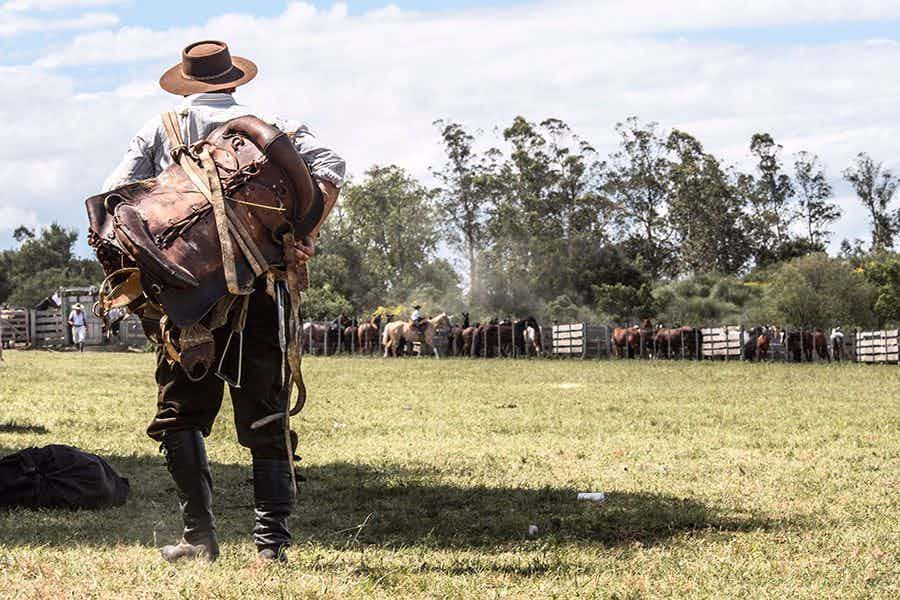
Gaucho and cows

Argentine beef and its production have played a major part in the culture of Argentina, from the asado to the history of the gauchos of the Pampas. Landowners became wealthy from beef production and export, and estancia owners built large houses, important buildings in Buenos Aires and elsewhere, and contributed to politics, philanthropy and society.

hudsonn 300x200 Argentine Beef

Argentine Pampas

So there was clearly money to be made from cows in Argentina but why are they so popular and what makes them delicious?

Beef quality is dependent on the diet provided to cattle and their living conditions. The two different farming regimes used for beef production in Argentina are grass pasture and feedlot-based farming. Argentina’s rainfall and largely temperate climate result in high quality pastures, which may, however, not be suitable for more intensive agriculture. The Humid Pampa  (Pampa Húmeda) is an extensive region of flat, fertile grassland of loessic origin in central to lower Argentina. It has a precipitation average of 900 mm per year and is the most important and best-known cattle-producing region, as it has vast and open pastures. Grass-fed beef is believed to be healthier than beef from feedlots, as it contains more omega three fatty acids than grain-fed beef, and so does not contribute so much to raising cholesterol in humans. Although the latter diet is increasing, grass-fed beef is still the most popular in Argentina

Grass-fed cattle are living under more natural conditions, and are less likely to have hormone implants. On the other hand, the technique requires large amounts of expensive land and a larger number of trained staff. Additionally, it takes longer to raise the animal.

As beef is increasingly mass-produced, farming techniques with the ultimate goal of fattening the animals are evolving; the most common of these is grain-fed beef cattle held in feedlots. But as the animals, denied physical effort and stocked together, get fatter. In order to prevent disease on farms and feedlots, the animals are fed antibiotics. The feedlot diet guarantees constant and controlled results, year-round productivity as it is not as dependent on climate and does not require so much land. Taking into consideration all these factors, it is thus the cheaper diet, but there are suggestions it is less beneficial for the welfare of the animals and for the health-giving qualities and flavour of the meat.

It may prove difficult for the consumers in Argentina, either buying in a restaurant or at a butchers shop, to identify whether the cow has been grass fed or grained fed. Labeling has yet to really take off in Argentina. However if you ask your local butcher nicely than then he might provide you with the answer. You can ask this in restaurants as well. If they do not know whether the cow has been grass fed or grain fed then its likely that it has been grain fed.   Ultimately you will know after your meal. Once you have found your trusted beef supplier then stick to it and develop a good relationship.

Two breeds of cows worth looking for:

Horthorn

Originally from northeast England, the shorthorn was introduced to Argentina in 1826 and was the first foreign breed to enter the country. As in many other countries, Argentina’s selection was designated to produce not only meat but milk as well.

Aberdeen Angus

Originally from Scotland, the Aberdeen angus were first introduced to Argentina by Don Carlos Guerrero in 1879. They are generally found in temperate climates. Instead of focusing on crossbreeding in order to strength their qualities, Argentine farmers decided to focus on a purebred evolution based on natural and high-quality nutrition.

images4 Argentine Beef

Aberdeen Angus

Here are the main cuts to go for; In Spanish and English;

1. bife de chorizo – sirloin; a thick, juicy and popular cut

2. bife de costilla – T-bone; a cut close to the bone; also called chuleta

3. bife de lomo – tenderloin; a thinly cut, more tender piece

4. cuadril – rump steak; often a thin cut

5. ojo de bife – ribeye; a choice smaller morsel

6. tira de asado – shortribs; thin strips of ribs and meat sliced crosswise

7. vacío – flank steak; textured and chewy, but very tasty

images5 Argentine Beef

Nicely prepared

If you don’t specify, your steak will be cooked a punto (medium). To get it pink on the inside ask for jugoso (medium rare). Vuelta y vuelta or poco cocido means rare, and well done is bien cocido.

Asado is a term used both for a range of barbeque techniques and the social event of having or attending a barbecue. A great way to enjoy yourself whilst learning the Spanish language.

images6 Argentine Beef

Parrilla

You will find numerous parrillas in Buenos Aires. These are essentially steakhouses. The parrilla is the actual bbq itself. Ensure that the parrilla is authenic, uses natural coals and is operated by a competent individual.


.


Argentine Icons

Tuesday, May 14, 2013 14:56

Categories - Argentine Customs and Culture - 0 Comments

Ernesto ”Che“ Guevara June 14,1928–October 9, 1967, commonly known as el Che or simply Che, was an Argentine Marxist Revolutionary physician, author, guerrilla leader, diplomat, and military theorist. A major figure of the Cuban Revolution, his stylized visage has become a ubiquitous counter culture symbol of rebellion and global insignia within popular culture.


images2 Argentine Icons

Che

Carlos Gardel (born Charles Romuald Gardes; 11 December 1890 – 24 June 1935) was a singer, songwriter, composer and actor, and is perhaps the most prominent figure in the history of tango. The unerring musicality of Gardel’s baritone voice and the dramatic phrasing of his lyrics made miniature masterpieces of his hundreds of three-minute tango recordings. Together with lyricist and long-time collaborator Alfredo Le Pera, Gardel wrote several classic tangos.


descarga Argentine Icons

Gardel

Charly García (born Carlos Alberto García Moreno on October 23, 1951) is a singer-songwriter, pianist, keyboardist, guitarist and bassist from Argentina with a long career in rock music, forming successful groups such as Sui Generis and Seru Giran, cult status groups like La Maquina de Hacer Pajaros, and as a solo musician. Widely considered by critics as one of the most influential rock artists in the Spanish rock .


images 1 Argentine Icons

Charly Charly Charly…

Evita was the second wife of President Juan Peron  and served as the First Lady of Argentina from 1946 until her death in 1952. She famously gave a speech from the Casa Rosada to successfully get her husband out of jail and reinstated as the leader. Her rise from obscure poverty to the heights of national and even international prestige is a compelling story of personal ambition and achievement.  Evita represents hope, beauty, Argentine identity and women.


descarga 1 Argentine Icons

Evita

Diego Armando Maradona 8 born 30 October 1960) is an Argentine football coach as well as a manager and former player. Many experts, football critics, former players, current players and football fans in general consider Maradona to be the greatest football player of all time. He was joint FIFA player of the 20th Century with Pele. Formerly a player for Boca Juniors he was soon raised to an unprecedented status. Today the Boca fans say this; ‘Boca is our religion, La Doce (home supporters stand) is our church and Maradona is our God.´


descarga 2 Argentine Icons

God

Alejandro Agresti (born June 2, 1961, in Buenos Aires) is an Argetine film director, writer and producer. He has become increasingly influential in the United States and directed The Lake House with top Hollywood actors Sandra Bullock and Keanu Reeves in 2006.


descarga 4 Argentine Icons

In action

Emanuel David “Manu” Ginóbili (born 28 July 1977) is an Argentine professional basketball player. Coming from a family of professional basketball players, he is a member of the Argentine men’s basketball team and the San Antonio Spurs in the NBA.


AAGR027 1 300x240 Argentine Icons

Manu

Gabriela Beatriz Sabatini (born 16 May 1970 in Buenos Aires, Argetina) is a former professional Argentine tennis player. She was one of the leading players on the women’s circuit in the late-1980s and early-1990s. She won the women’s singles title at the US Open in 1990, the women’s doubles title at Wimbledon in 1988, two Year-End Championships in 1988 and 1994, and a silver medal at the 1988 Olympic games.


Gabriela Sabatini US Open 1999 300x225 Argentine Icons

Gabriella

Queen Máxima of the Netherlands Máxima Zorreguieta Cerruti; born 17 May 1971) is the wife of King Willem-Alexander. On 30 April 2013, she became the first Dutch queen consort since Emma of Waldeck and Pyrmont who held that title until 1890.


princess maxima 01 225x300 Argentine Icons

Maxima

Bérénice Bejo (born 7 July 1976) is an Argentine-born French actress, known for playing Christiana in the 2001 film A knight´s tale and Peppy Miller in the 2011 film The Artist. Her work in The Artist received a nomination for the 2011 Academy Award for best supporting actress and won her the Cesar Award for best actress.


images 2 Argentine Icons

Berenic Bejo

Los Gatos –  The group got their start in 1967. They recorded their first two singles “Ayer Nomás” and A-side “La Balsa”, which turned into an unpredicted large scale hit in the Argentine winter of 67, selling over 200,000 copies, leading to their full-length debut later that year. The following year they went on tour around the Southern Cone, and then released their 2nd album Seremos Amigos, permeating psychedelic rock during the height of that sub-genre of rock.


descarga 5 Argentine Icons

Los Gatos

Jorge Francisco Isidoro Luis Borges orge Francisco Isidoro Luis Borges (24 August 1899 – 14 June 1986), known as Jorge Luis Borges was an Argentine short-story writer, essayist, poet and translator born in Buenos Aires. His work embraces the “character of unreality in all literature”.  His most famous books, Ficciones (1944) and The Aleph (1949), are compilations of short stories interconnected by common themes such as dreams, labyrinths, libraries, mirrors, animals, fictional writers, philosophy, religion and God. His works have contributed to philosophical literature and also to both the fantasy and magical realism genres.


images 3 Argentine Icons

Jorge Luis Borges

Ricardo Darin is one of the biggest movie stars in Argentina. He played a number of parts in TV series for several years where he became popular as a young leading actor. His most prominent roles as a film actor include Nine Queens (2000), El hijo de la Novia (2001),Luna de Avellaneda (2004), El Aura (2005) and La senal (2007), which was also his directorial debut. He recently starred in the Academy Award winning film The secret in their eyes (2009). In 2011 the Konex  Foundation from Argentina granted him the Diamond Konex Award, one of the most prestigious awards in Argentina, as the most important personality in Entertainment in the last decade in his country.


descarga 6 Argentine Icons

Ricardo Dawin

José Francisco de San Martín (25 February 1778 – 17 August 1850), known simply as José de San Martín, was an Argebntine general and the prime leader of the southern part of South America´s successful struggle for independence from the Spanish Empire. Born in YapeyuCorrientes, in modern Argentina, he left his mother country at the early age of seven to study in Malaga, Spain.


images 4 Argentine Icons

San martin

Juan Manuel Fangio; June 24, 1911 – July 17, 1995, nicknamed El Chueco (“the bowlegged one”, also commonly translated as “bandy legged”) or El Maestro (“The Master”), was a racing car driver from Argentina, who dominated the first decade of Formula One racing.  He is viewed by many as the all time best F1 driver. His influence is ever present today on the streets of Buenos Aires….


images 5 Argentine Icons

Fangio

Benito Quinquela Martin (March 1, 1890 – January 28, 1977) was an Argentine painter born in La Boca, Buenos Aires. Quinquela Martín is considered the port painter-par-excellence and one of the most popular Argentine painters. His paintings of port scenes show the activity, vigor and roughness of the daily life in the port of La Boca.


images 6 Argentine Icons

Benito

Messi –  Say no more…………………………………………….

images 7 Argentine Icons

The God

Ethnicity in Buenos Aires

Friday, April 19, 2013 17:31

Categories - Argentine Customs and Culture - 0 Comments

Buenos Aires is one of the largest urban areas in the world. Approximately 3 million people live in Buenos Aires proper, and 13 million people in the Greater Buenos Aires metropolitan área.

Ethnicity in Buenos Aires is a topic that I’ve been wanting to write about for a while as I’ve been studying Spanish here for many months and the city´s cultural abundancy interests me so much. After my first arrival to BsAs a couple of years ago, I instantly realised what a cultural melting pot this city was. Walking down any street in this city and you are able to see, hear and experience multiple Spanish accents, skin tones, body and face structures, styles of dress and of course, numerous languages.  All of these things have contributed to my staying long-term as this diversity is exactly what I’m looking for out of an overseas experience. In my opinion, it’s these qualities that have allowed so many foreigners to fall in love with this place and end up staying months or even years.

So, amazingly 85% of Argentina’s population traces back to European heritage-an incredible figure right? The other 15% comprises of populations from neighbouring nations, Asian, Native American, African American and Middle Eastern backgrounds. As migration flows to Buenos Aires and Argentina are constantly shifting, the composition of the community is changing with that. As you can imagine, what results is a very complex intermixing of races, sharing of traditions and consequently a very interesting city to explore in terms of cuisine, religious celebrations, architecture and people-watching!

1 Afgang Liverpool 1926 edi 300x178 Ethnicity in Buenos Aires

European Immigration to South America

Despite this constant state of cultural change stemming from  immigration in Argentina, I would like to mention just a few ethnic groups here that may not be obvious to the tourist’s eye. Sometimes to see and experience this ethnic diversity, it’s worth a short ride to Buenos Aires’ more residencial neighbourhoods.

ba portret 300x225 Ethnicity in Buenos Aires

Armenian Grocery Store

Spaniards and Italians are the largest and most influential of the several European ethnic groups in Argentina. The first wave of Spaniards and Criollos came in the 16th century with the exploration and further expeditions of the continent. By 1778, there were 25000 living in the región. A further census in 1824 noted Buenos Aires city had 55,416 inhabitants, of which 40,000 were of European descent. From the year 1856, policies were implemented that encouraged massive European immigration. Consequently, Argentina’s population almost doubled with arrivals of European immigrants from Italy, Spain, Germany, Wales, Poland, Croatia, Russia, Denmark, Sweden, Switzerland, Finland and Belgium. Smaller but significant numbers of immigrants included those from France, Austria, Hungary,  England, Scotland and Ireland.

Obviously many of these European races consist of having quite fair complexions, therefore it is very easy to assume someone on the street or in a bar is a fellow traveller, only to then discover that they are actually from here. I still experience this often and it’s always one awesome surprise (especially when you are able to practice your Spanish with them and they are always happy to help).

hotel de immigrantes 150x150 Ethnicity in Buenos Aires

Arrival in Buenos Aires

Moving onto one of the largest minority groups here in Argentina-there are an estimated 180 000 Argentines of Asian ancestry! 120 000 of these  are of Chinese descent, 2 000 of Japanese descent, 25 000 of Korean descent, and 2 000 of Lao descent. Consequently, it’s of no surprise that their culture has become a part of modern Argentine society.

0 300x202 Ethnicity in Buenos Aires

Chinese New Year

In Buenos Aires, the “Jardín Japonés” (Japanese Garden and Teahouse) has become a traditional landmark of the city since its opening 30 years ago.

buen0801071 BB 300x208 Ethnicity in Buenos Aires

Jardin Japones

Koreans live primarily in Balvanera and Flores (where the Koreatown is located) districts of Buenos Aires, and are mainly involved in the manufacturing and selling of textiles.

The Chinese group of immigrants were largely entrepreneurs who settled in Buenos Aires during the 1990s. There is a Chinatown with a Buddhist temple in Belgrano. Much of the population are involved with grocery retailing which has caused Chinese-owned stores to become a common feature of Buenos Aires and referred to as simply ´chinos´. Other important businesses include textile manufacture and buffet-style restaurants.  Aside from generating local businesses, the Chinese have made their mark in the country in many other ways. Mandarin Chinese has become increasingly prominent in Argentina, as it is considered an appealing language to learn and master in business, given the expanding Chinese market and its rising clout in international diplomacy, trade and finance in South America. Today, Chinese are the fastest growing community in Buenos Aires.

20130211121335 150x150 Ethnicity in Buenos Aires

Un ´chino´

Today, approximately 250,000 Jews live in Argentina. It is the largest Jewish community in Latin America, the third-largest in the Americas (after that of the United States and Canada), and the sixth-largest in the world. The neighborhoods of Villa Crespo, Belgrano and especially Once (the oldest and most traditonal) are home to thriving Jewish communities where you’ll find synagogues, kosher restaurants, delis, butchers, supermarkets, panaderias, and other supplies of needs for those who keep kosher. Amazingly enough there is also a kosher McDonald’s in Abasto Shopping Centre in Once.

LatAm 2 965x543 300x168 Ethnicity in Buenos Aires

Jewish celebration

In town, the Israeli Congregation Synagogue, otherwise known as the ¨Liberty Temple¨ was the first synagogue built in Buenos Aires and declared a National Historical Monument in 2000. The building next door houses the Jewish Museum of Buenos Aires. Go to Plaza Lavalle (Libertad 733) to see these beautiful monuments.

Foto10203 233x300 Ethnicity in Buenos Aires

Libertad Temple

Argentina has the largest mosque and Muslim population in Latin America. It is home to nearly one million Muslims, representing 2.5% of the total population. Between 1860 and 1954 many Armenians, Syrians, Iranians and Lebanese came to Argentina as a consequence of the Turkish Ottoman Empire, Second World War and of the Iranian Revolution.

centro cultural islamico 300x224 Ethnicity in Buenos Aires

Mosque in Palermo

The Armenian community of Argentina in particular has maintained its identity with flying colors thanks to its devotion to the church, school and the family structure. Also, visit the neighbourhoods of Once, Villa Crespo, y Calle Armenia in Palermo Soho to experience the best of Arab food and atmosphere.

vegetarians 4 150x150 Ethnicity in Buenos Aires

Armenian food

Since the 1980s, much immigration from Bolivia, Paraguay and Peru has had a huge impact on ethnic society here in Buenos Aires as much of the population are here without the appropriate visas. However, the Argentine Government has launched a program to encourage ilegal immigrants to regularize their status. Putting the illegality aside, this immigration has brought prosperity too like increased work opportunity, and sharing of traditions.

As I lived in centro for the first few months of my stay here, I frequently stumbled across great cultural street parties on the weekends, usually on Avenida 9 de Julio (below) or Avenida 25 de Mayo. I came across this one late last year where thousands of Bolivian dancers and musicians were performing on the widest avenue in the world and it was truly one of the coolest things I’ve ever witnessed.

Tinku2 300x234 Ethnicity in Buenos Aires

Peruvian festival, 9 de Julio

Happy exploring in Buenos Aires and I’m sure you will love these cultural aspects of the city!

Funny and Wonderful Things to Experience in an Average Day in Buenos Aires

Friday, March 22, 2013 13:01

Categories - Argentine Customs and Culture - 0 Comments

The benefits of living in a foreign country, learning Spanish and experiencing everything that is involved with local life are absolutely endless. After 6 fabulous months in Buenos Aires, I have grown to love some particularly odd or small things  that are typically Argentine and that as a visitor, you are surely to hear, see or experience.

HEARING PIROPOS

‘Piropos’  are comments that typically come from Porteño men and are aimed at almost any woman. They are whispered or shouted from shops, cars or across the street and can take a little while to get used to as a foreign girl. It is typical to hear anything along the lines of ‘Que hermosa’, ‘Oh linda’ or a simple whistle. Personally, it is easy to tire of them as the comments make me feel a little embarrassed, on the other hand though it is nice to be noticed and appreciated in that way.

JS120811 PIROPOS08 300x200 Funny and Wonderful Things to Experience in an Average Day in Buenos Aires

A typical example of how a ‘piropo’ might come about


NOT HAVING TO ´STAND´IN THE SUBTE

This is actually something I find hilarious these days. The crowds in the train used to scare me quite a lot as most of the time you are pressed up against some stranger and really have to hold onto your bag. Something changed a few weeks ago and I realized that when I am so squished up against people I can just relax so much that I don’t have to worry about my legs holding me up-everyone around me is doing it for me! I do realize this sounds incredibly lazy but for me those moments really give me a sense of ‘community’.

6333029320 434db86a32 z 300x199 Funny and Wonderful Things to Experience in an Average Day in Buenos Aires

Subtes during peak hour


STREET DEMONSTRATIONS

Street protests and demonstrations are such cool things to witness here for  visitors. They are relatively common in the city centre and out of the 6 months in which I’ve resided in BA, I have lost count of the number of times where I have walked out of my Spanish school, walked around the corner, and been confronted by  hundreds of passionate workers with huge banners, chanting, banging on drums and setting off fire crackers. The majority of these demonstrations are non-violent and only very rarely will things turn slightly ugly. Luckily, there is normally a huge security and pólice presence during these times. It is clear that there are some social problems in this country (as there are in any country) but I find it fascinating that these issues are displayed so outwardly and to me, so passionately. It really allows visitors to realize what exactly goes on here from a local point of view and always makes me think of what these demonstrations would have been like in Argentina’s tougher times.

demonstrations in Argentina’s capital Buenos Aires 300x199 Funny and Wonderful Things to Experience in an Average Day in Buenos Aires

Street demonstration


116264420  354241b 300x200 Funny and Wonderful Things to Experience in an Average Day in Buenos Aires

Thousands crowd to voice an opinion


MATE SHARING

Drinking mate is a critical part of sharing life together in Argentina. Go to any plaza or park around 5:00 PM on a nice day and you will quickly notice circles of family and friends laughing, talking and sharing in this traditional drink. At first, I was personally concerned with all the saliva-sharing (as people use the same straw) however, I’ve learned that it really doesn’t contribute to sicknesses in Argentina. After getting over that, I quickly realized what a lovely and communal tradition it really is. As a foreigner, it’s touching when a complete stranger offers you a drink from their mate, but for them, this is completely normal.


mate dorrego 300x199 Funny and Wonderful Things to Experience in an Average Day in Buenos Aires

Mate sharing


RANDOM DISPLAYS OF SINGING

You can just walk down any random Street in Buenos Aires and hear someone singing with gusto. Most of the time I turn around and I realize that this singer is just some normal guy walking to his office or to lunch, and has just decided to show off his fabulous voice. I’m not quite sure why it is considered normal here but it has to make you smile. Each time it happens, I think how much I love this city and its’ randomness!


article 2293118 18A4FB0D000005DC 339 964x597 300x185 Funny and Wonderful Things to Experience in an Average Day in Buenos Aires

Public joy


KISSES, EVERYWHERE

Random fact: The standard greeting in Argentina is a kiss on one cheek; men kiss women and vice versa, women kiss women, and men kiss men, whether meeting for the very first time or having already seen one another several times in the same day. I love this as it feels oh so European and, well, just really sweet.

Public displays of affection between couples however is a completely different thing and is so common here that over time I’ve stopped being shocked when seeing a couple just soo into each other on the street. I think couples in many European countries, the States and Australia of course are much more conservative when it comes to this and I guess you are just accustomed to however it goes in your country. Putting that aside, it seems that nearly everyone in this city is so in love which I adore now as it reminds me a little of Paris.

PDA BA1 300x200 Funny and Wonderful Things to Experience in an Average Day in Buenos Aires

Public display of affection


DASHING ACROSS 9 DE JULIO

Avenida 9 de Julio is the widest street in the world at an imposing sixteen lanes. It typically takes at least 2 traffic light rotations to cross.


Buenos Aires Av. 9 de julio 300x169 Funny and Wonderful Things to Experience in an Average Day in Buenos Aires

Avenida 9 de Julio


BECOMING A BOCA FAN

The most thrilling and visceral experience of any visit to Buenos Aires is probably donning a fluffy blue and yellow hat and bouncing along with the tribal fanatics of Maradona‘s beloved team. The intoxicating display of the leaping and singing multitude is often more exciting than the game on the pitch. There is no more intense encounter than Boca Juniors playing their rivals River Plate. But any visit to Boca Juniors’ intimate Bombonera stadium will be an adventure that you’ll never forget. A word of warning, hang on to your wallet!

DSC01289 300x225 Funny and Wonderful Things to Experience in an Average Day in Buenos Aires

Boca fans going wild


I really hope you enjoyed these things as much as I do, safe travels!


New Year’s Eve 2012/2013 in Buenos Aires

Thursday, December 20, 2012 9:54

Categories - Argentine Customs and Culture, Concerts, Events, Festivals and Holidays - 0 Comments

fireworks New Years Eve 2012/2013 in Buenos Aires


There is always pressure to have a good time on New Year’s Eve, but don’t worry, you WILL! Celebrating the beginning of 2013 in Buenos Aires will be unforgettable regardless of whether you decide to spend a low-key night with friends and recently met fellow travellers, or if you decide to splash some cash on a glamorous gala, or a fancy tango show and dinner.


Below you will find few ideas on where to spend the last moments of 2012 and welcome 2013 in the “Cultural Capital of South America”. First I have to warn you: even though Buenos Aires is one of the most bustling cities in the southern hemisphere, surprisingly during summer when the heat wave comes, porteños leave the busy capital and enjoy the sun in one of many beach locations in Argentina and Uruguay. Therefore, as it also applies to New Year’s Eve, it results in the city being vastly deserted. It is also worth noting out that, unlike in Europe, most locals tend to spend that day with their families and friends at home, and start to go out very late at night. For some, who prefer less crowded places it might be an advantage, others might find it disappointing. Nonetheless, Buenos Aires has a lot to offer for the New Year’s Eve celebrations!


The most natural option for spending the last night of the year in Buenos Aires is at the Tango Show. Most of the tango houses prepare unique shows especially for that occasion, during which not only do you get to enjoy watching some brilliant tango performances while sipping Champaign, but also you can delight in some exquisite food. Prices vary depending on the complexity of service from USD$250 for a show at El Viejo Almacén to a premium price of USD$690 for an unforgettable gala at the Faena Hotel in Puerto Madero. Those who can’t afford this price tag, but have passion for tango and rather than watching the professionals prefer to show off their own moves on the dance floor, there is nothing better than milongas. As many places close down for public holidays, it is crucial to check the availability in advance.


Another alternative to those who like to party are various nightclubs (boliches). Check out Crobar Club, which puts up a special New Year’s show and hires some of the best DJs (entrance to John Digweed’s gig will set you back by AR$300) or Niceto Club which organizes “la Fiesta de Piso Compartido Edicion Especial Año Nuevo” for as little as AR$60.


Whichever options you choose don’t forget to step outside at midnight and enjoy a beautiful display of fireworks that will illuminate the skies above Buenos Aires. Make sure you organize your transport in advance as buses and tube tend to be very unreliable and taxis are in such a demand, that it is almost impossible to catch one (especially around 1am). As there is not much time left, try to book everything as soon as possible, as tickets tend to sell out very quickly!


HAPPY NEW YEAR!!!

Just Tango On – Scent of a Woman Review

Tuesday, August 7, 2012 13:42

Categories - Argentine Customs and Culture, Buenos Aires City Attractions, Expanish Film Club listings - 0 Comments

In Buenos Aires, all the tango lovers are familiar with Carlos Gardel, and his classic tango music “Por una Cabeza” [In Spanish it literally means by a head (of a horse), which talks about a compulsive horse-track gambler who compares his addiction for horses with his attraction to women.(Wikipedia)] It is not only a beautiful song to dance with, but also the directors’ favorite incidental music for movies. You must hear it in the famous Schindler’s list or Arnold Schwarzenegger’s True lies. But for me, the best version of this song is interpreted in the movie Scent of a woman by Al Pacino.

151545.45196996 298x300 Just Tango On   Scent of a Woman Review

Blind, grumpy, loudmouthed, irascible Lieutenant Colonel Frank Slade (Al Pacino) hires a pre-school student in need of money, Charlie Simms (Chris O’Donnell) to escort him to New York for a ‘final fling’. Charlie has his own issues that depress him, but the two end up having such a grand time in New York City. What makes the movie engaging is the bond that we see gradually occurring between our grumpy old man and the sweet and sensitive young Charlie that accepting each other and finding the new meanings of their lives.

Without a doubt, Pacino’s tango scene with Gabrielle Anwar (Donna) is the most classic highlight through out the whole movie. When Carlos Gedrel’s famous and popular Argentine tango Por una Cabeza begins, Frank leads the beautiful woman, gently and masterfully, through the beautiful ritual of the Tango. She seems to move as one with him. Effective camera work reveals Frank’s dramatic and romantic execution of the Tango, and Donna’s pleasure and surprise at her ability to follow him, effortlessly, through this colorful dance that she has long wished to do. It’s one such magical moment – unfettered, unforced, and highly enjoyable, the dancing moment flawlessly demonstrates Frank’s yearning for life.

If you make a mistake get all tangled up, just tango on.

—-Frank Slade

Two hours and a half, two man have just met, and a journey of a lifetime. Scent of a Woman is rather endearing and it possesses a level of charm; lovely, sweet, sad, and romantic yet uplifting. Same as “Por una Cabeza”, this movie is truly a classic for the ages.

Tags: , ,

2012 Olympic Uniform Fashion Contest III

Thursday, July 26, 2012 12:45

Categories - Argentine Customs and Culture, Concerts, Events, Festivals and Holidays - 0 Comments


Keeping up the Olympic Uniform Contest! In the last part of this series, have a look with Expanish at the Olympic outfits of Russia, South Africa, South Korea, Spain, and USA.

Russia:

Best Sports: Athletics, Gymnastics, and Wrestling

Medal Total: 316

Total Games Appearances: 7

Russia OKAY 300x200 2012 Olympic Uniform Fashion Contest III

Russia’s uniform is a simple sporty shell coat, featuring a stylized, swirling print, which designed by the Russian Giant Bosco.


South Africa:

Best Sport: Boxing, Athletics, Swimming, Long Jump

Medal Total: 70

Total Games Appearances: 17

South africa small 195x300 2012 Olympic Uniform Fashion Contest III


The uniform of South Africa comes from Leigh Schubert, an African fashion designer who born and raised in Durban. She was inspired by the symbol and dynamic colors of their national flag.

South Korea:

Best Sport: Combat Sports, Archery

Medal Total: 215

Total Games Appearances: 15

 2012 Olympic Uniform Fashion Contest III

South Korea’s ceremonial uniform inherits the style of old uniform (which was worn in 1948), sailor scarves and striped t-shirts make the uniform qualify as cool and fashionable.

Spain:

Best Sports: Sailing, Cycling, Tennis, Soccer

Medal Total: 115

Total Games Appearances: 21

SPAINJERSEYSS 300x238 2012 Olympic Uniform Fashion Contest III

Saúl Craviotto, a Spanish gold medal-winning canoeist, tweeted a pic of himself with the uniform, “En casa probándome la ropa de los JJOO!yo mejor no opino, os lo dejo a vosotros…”  (trying on the clothes for the Olympics! I better not comment, so I’ll leave it to you…”)

Poor Spain, due to the economic crisis, Spain outsources their uniform to the Russian company Bosco, however, when Spanish people choose affordability over the design itself, they get what they pay for. The whole country complained about the look of the outfit, and joked the uniform looks like ketchup and mustard had a terrible fight.


U.S.A :

Best Sports: Athletics, Swimming, Shooting, Diving, Boxing, Basketball and Gymnastics.

Medal Total: 2291

Total Games Appearances: 25

ralph lauren usa olympic closing uniform 300x216 2012 Olympic Uniform Fashion Contest III

Ralph Lauren takes the US uniform to an elegant level; it features the typical navy blazer with white pants or skirt, and a beret, very American! US Congressmen was upset by the fact that the uniforms were made in China. “Put them in a big pile and burn them”, said by Senate Majority Leader Harry Reid, and a Chinese press replied with “The Olympics spirit is all about separating sports from politics, but these U.S. Politicians are going too far and trying to force a political tag onto the uniforms”. With the 2012 presidential elections draw closer, the word “made-in-china” becomes more and more sensitive to the U.S. election candidates.


Tags: , , , ,

2012 Olympic Uniform Fashion Contest II

Tuesday, July 24, 2012 11:19

Categories - Argentine Customs and Culture, Concerts, Events, Festivals and Holidays - 0 Comments


Expanish will introduce you the uniforms of France, Germany, Holland, Italy, Jamaica, Japan and New Zealand. Personal opinion, Most fashionable uniforms in the game! Let’s get the second round delegation group fashion parade started NOW!

France:

Best Sports: Athletics, Cycling, Fencing

Medal total: 637

Total Games Appearances: all 26 summer Olympic Games

 2012 Olympic Uniform Fashion Contest II

France took the classic blazer and pants or skirt for girls, and added a bit more of a modern twist. It’s truly where fashion started, no matter what they wear; the rest of the world follows their lead.

Germany:

Best Sports: Athletics, Canoeing and Equestrian

Medal Total: 1260 (Combined medals of modern Germany,East Germany,West Germany and the Unified Team of Germany)

Total Games Appearances: 23

Germany 300x218 2012 Olympic Uniform Fashion Contest II

Germany presents with shiny plastic blue and pink jackets, printed colored scarves. The uniform is collaboration between Sioux and Bogner.

Holland:

Best Sports: Swimming, Cycling, Water polo, Field hockey and Rowing

Medal Total: 248

Total Games Appearances: 24

Holland 300x210 2012 Olympic Uniform Fashion Contest II

Holland’s uniforms incorporate a vintage look while proudly displaying the traditional Dutch Orange (Orange is the color of the Dutch Royal Family), SuitSupply is the company that designed this bold and distinctive look.

Italy:

Best Sport: Fencing, Cycling and Athletics

Medal Total: 522

Total Games Appearances: 25

Italy 300x200 2012 Olympic Uniform Fashion Contest II

Italy invites famous designer Georgio Armani for its fashion status. The simple athletic look is very impressive, and the lyrics of Italian National Anthem on the inside of the jackets are another bonus!


Jamaica:

Best Sports: Running track

Medal total: 53

Total Games Appearances: 15

Jamaica 300x200 2012 Olympic Uniform Fashion Contest II

Jamaican’s uniform is designed by Bob Marley daughter Cedella Marley, there is no doubt that her dad will be proud. The bright color combinations and fine cutting fresh up the Olympic air.

Japan:

Best Sports: Judo, Gymnastics, Swimming and Wrestling

Medal Total: 360

Total Games Appearances: 20

 2012 Olympic Uniform Fashion Contest II

The red and grey blazer, white single pleat pant brings Japan a lot of sharpness.

New Zealand:

Best Sports: Swimming, Sailing, Rowing and Equestrian

Medal Total: 86

Total Games Appearances: 21

New Zealand 300x200 2012 Olympic Uniform Fashion Contest II

Rodd & Gunn’ s collection forNew Zealand inherits the vintage look in late 40’s and early 50’s. Hats off to this lovely uniform line.

Part III is coming up on Thursday, stay in tune!

Tags: , ,

2012 Olympic Uniform Fashion Contest I

Thursday, July 19, 2012 11:46

Categories - Argentine Customs and Culture - 0 Comments

Only 8 days to go for the London Olympics Games, the delegation groups of different countries have started a Uniform Fashion War of opening ceremony and village wears that are designed by some Big-name fashion stars. The designer tried hard to combine their countries’ identity, stylish cuttings and also the spirit of the Olympic Games. Expanish will present you the uniforms of Argentina, Australia, Brazil, Britain, Canada and China.

Argentina:

Best Sports: Boxing, Field Hockey, Basketball, Sailing and Soccer

Medal Total: 66

Total Games Appearances: 23

Argentina uniform 2 300x200 2012 Olympic Uniform Fashion Contest I

The uniform of Argentina comes from the idea of the yellow Sun of May on the national flag. Months ago, one argentine legislator suggested that on the logo of athlete’s sportswear should carry the message ‘Las Malvinas son Argentinas’ (The Falklands are Argentine). With the Internaional Olympic Committee’s rule, the proposal failed and Cristina said with the pride and honor, the argentines will not use the games as a political platform.

Australia:

Best Sports: Athletics, Swimming and Cycling

Medal total :432

Total Games Appearances: 26

Austrilia 300x224 2012 Olympic Uniform Fashion Contest I

Australia’s athletes will wear a green blazer over white Oxford shirt, paired with white pants or a skirt, the uniform was designed by Daniel Bracken in SportsCraft.

Brazil:

Best Sports: Volleyball, Judo, Sailing, Athletics

Medal Total: 91

Total Games Appearances: 20

 2012 Olympic Uniform Fashion Contest I

The athletes from Brazil will present themselves with the famous yellow and green shirt with stripes on the sleeves.

Britain:

Best Sports: Athletics, Cycling, Sailing, Swimming, Rowing

Medal Total: 719

Total Games Appearances: Britain has entered all 26 Olympic Games.

british uniform unveiling a l 300x168 2012 Olympic Uniform Fashion Contest I

As the host country,England invited Stella McCartney to design their uniforms. She was inspired by the Union flag and also added a more ‘modern’ feel to the sportswear. However, many people were not happy with the fact that Stella took out the red off their flag, and criticized her changed the national colors.

Canada:

Best Sports: Athletics, Canoeing, Swimming

Medal Total: 254

Total Games Appearances: 24

canada BEST 300x200 2012 Olympic Uniform Fashion Contest I

The collection of the Canadian Olympic wear represents the great outdoors and summer in Canada with denim jackets; it is made up of strong national symbol: Maple Leaf.

China:

Best Sports: Diving, Gymnastics, Table Tennis, Weightlifting and shooting

Medals Total: 392

Total Games Appearances: 8

 2012 Olympic Uniform Fashion Contest I

The uniform of Last Olympic’s host country China, keeps the Chinese Red elements and use a new digital control system to reveal the freshness of the color.


Tags: , ,


@ 2010 - 2012 Expanish Tte Gral Juan D Perón 698 - C1038AAN - Buenos Aires, Argentina
USA/CAN+1 888 EXPANISH ARG +54 11 5252 3040 - info@expanish.com